For Counsel
Articles for attorneys evaluating civil engineering disputes: how the engineering standard of care is assessed, why stormwater facilities fail, how rainfall intensity drives flooding, and what to gather before an initial case review. Each article is general information, not an opinion on any specific matter.
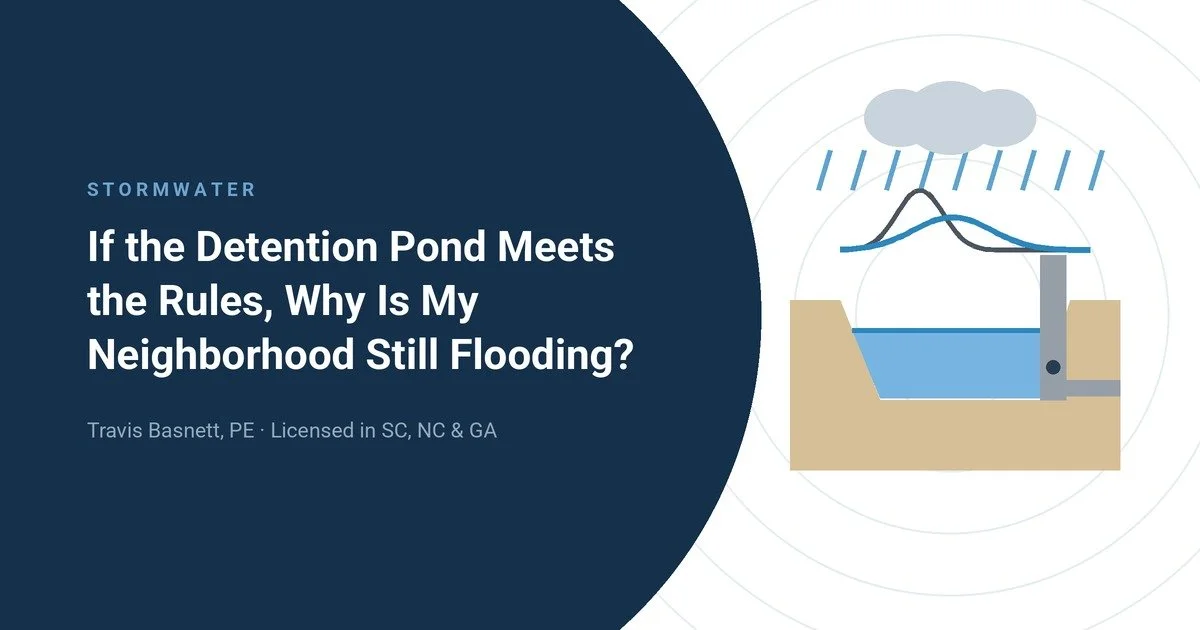
A detention pond can meet its stormwater requirements while a neighborhood downstream still floods. The difference between how fast water arrives and how much arrives explains why both can be true.
Why rainfall intensity, timing, drainage paths, and downstream conditions can produce serious local flooding even when 24-hour rainfall totals seem modest.
Professional negligence claims rarely turn on whether an engineering design was perfect. This article explains how experts evaluate the applicable standard of care, distinguish code compliance from reasonable professional judgment, reconstruct the project context, and separate a potential departure from technical causation.
Stormwater failures rarely fit neatly into one category. This article explains how design assumptions, field execution, deferred maintenance, and changes to the surrounding watershed can interact, and outlines the evidence used to distinguish among them.
Civil engineering disputes may involve design, construction, maintenance, changed site conditions, or a combination of those factors. This practical guide identifies the plans, surveys, photographs, rainfall data, construction records, maintenance documents, and other information counsel should gather before requesting an initial engineering review.