
What Happens When It Rains?
STORMWATER
Travis Basnett, PE · Licensed in SC, NC & GA · 9-minute read
Where does rain go after it falls? Follow a single raindrop from the sky to the river.
Rain is the third kind of water in a city, and nobody turns it on.
At the end of the last article, we stood at the curb and looked down at the grate in the gutter. The water entering it does not go to the treatment plant. It goes somewhere else.
This is that somewhere else: the trip from a cloud to the Congaree.
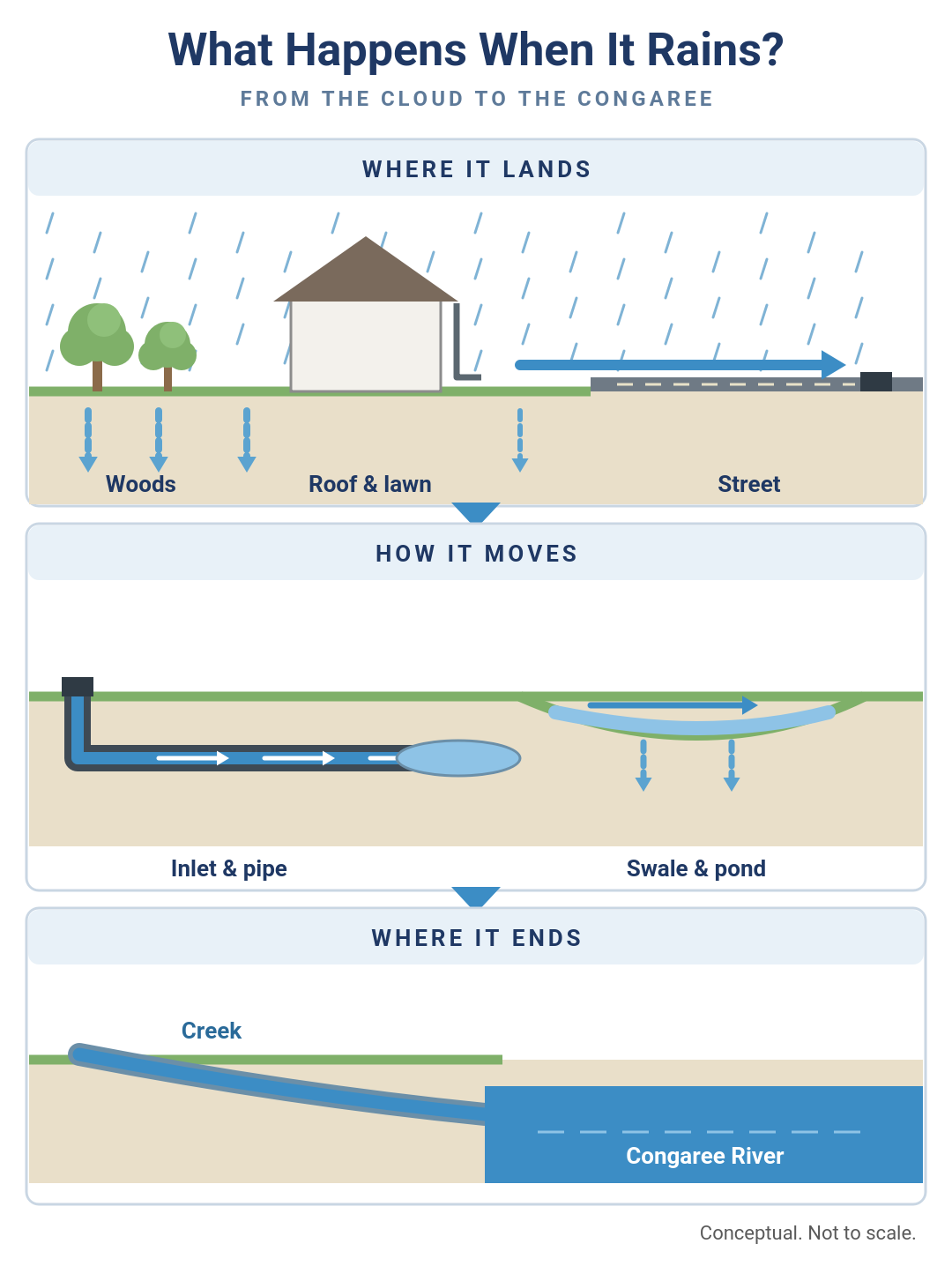
Figure 1. The whole trip, from cloud to river. Where rain lands decides which route it takes, and how fast.
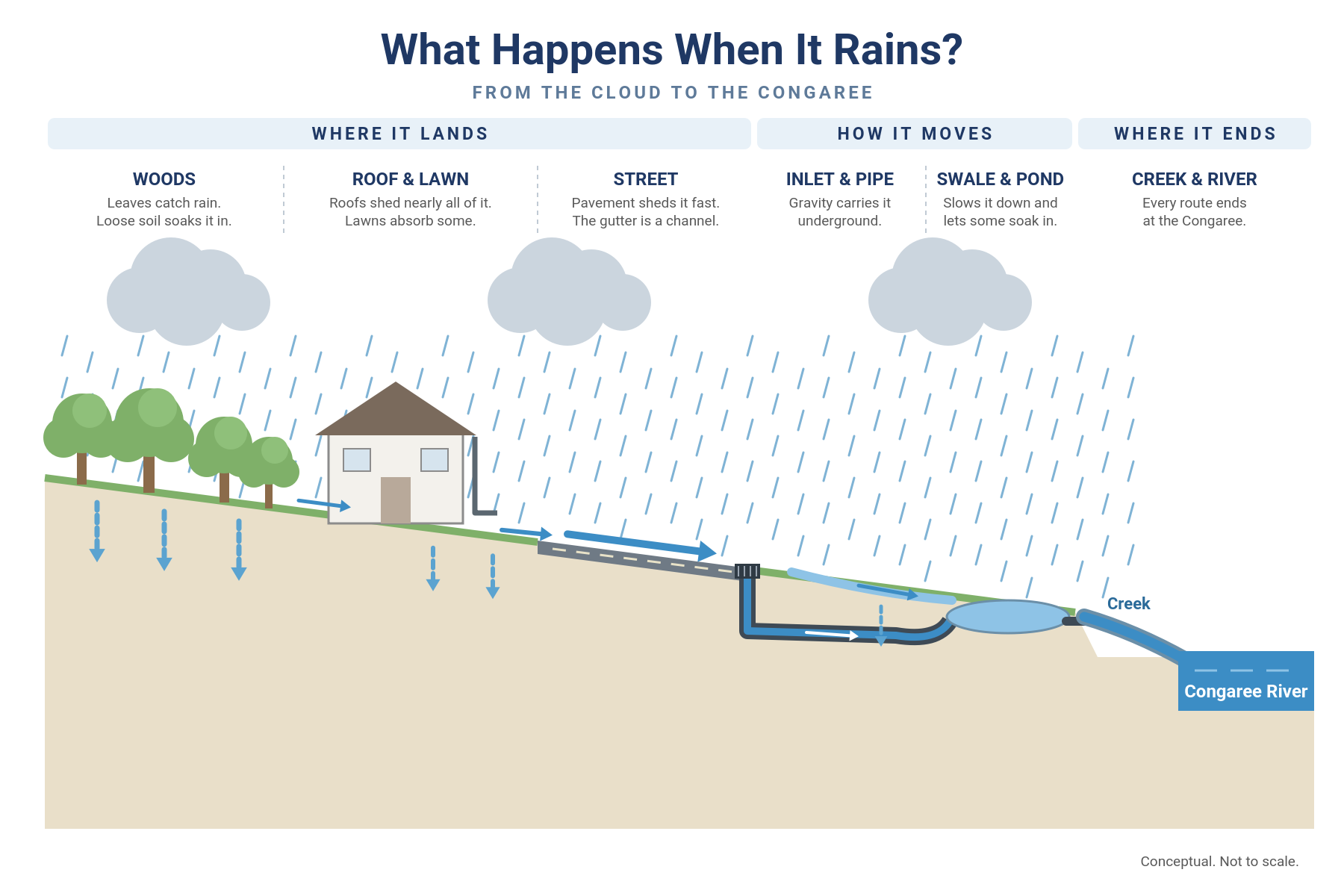
Figure 1. The whole trip, from cloud to river. Where rain lands decides which route it takes, and how fast.
Nobody turns it on
Every other system in this series starts with a person making a choice. You turn on a faucet, and water comes. You flush, and water leaves. The demand is created by people, it grows gradually, and the system can be sized for it.
Rain is different. Nobody turns it on, and nobody can turn it off. It arrives uninvited, on its own schedule, everywhere at once, and it does not wait for a pipe to empty before sending more.
Every other water system is sized for what people do. Stormwater is sized for the weather.
That single fact shapes everything that follows. You cannot design a drainage system for "whatever the sky decides to do," because the sky can always do more. So stormwater systems are designed around a chosen level of risk: a storm of a particular size, likely to happen with a particular frequency.
That choice matters when more rain arrives than the pipes can carry.
How much water we are talking about
An inch of rain does not sound like much. Spread it over a single acre, and it is about 27,000 gallons.
On a typical 2,000-square-foot roof, one inch of rain is roughly 1,250 gallons, all of it arriving on one house over the course of a single storm.
Volume is only half the story. Rainfall intensity is how fast that water arrives. An inch spread across a whole day gives the ground and drainage system more time to absorb and carry water than the same inch falling in twenty minutes. That is why a short thunderstorm can cause more flooding in Columbia than a long, steady rain. The drainage system cares about speed as much as volume. What the rain lands on determines how much of that volume becomes runoff, and how quickly it reaches the system.
Where it lands decides everything
When a raindrop hits the ground, it has only a few possible futures. It can be caught by a leaf and evaporate before it ever reaches the soil. It can soak into the ground. It can sit in a low spot until it evaporates or soaks in. Or it can run off across the surface toward somewhere lower.
Only that last one becomes stormwater runoff. Which of those futures a raindrop gets is strongly influenced by what it lands on.
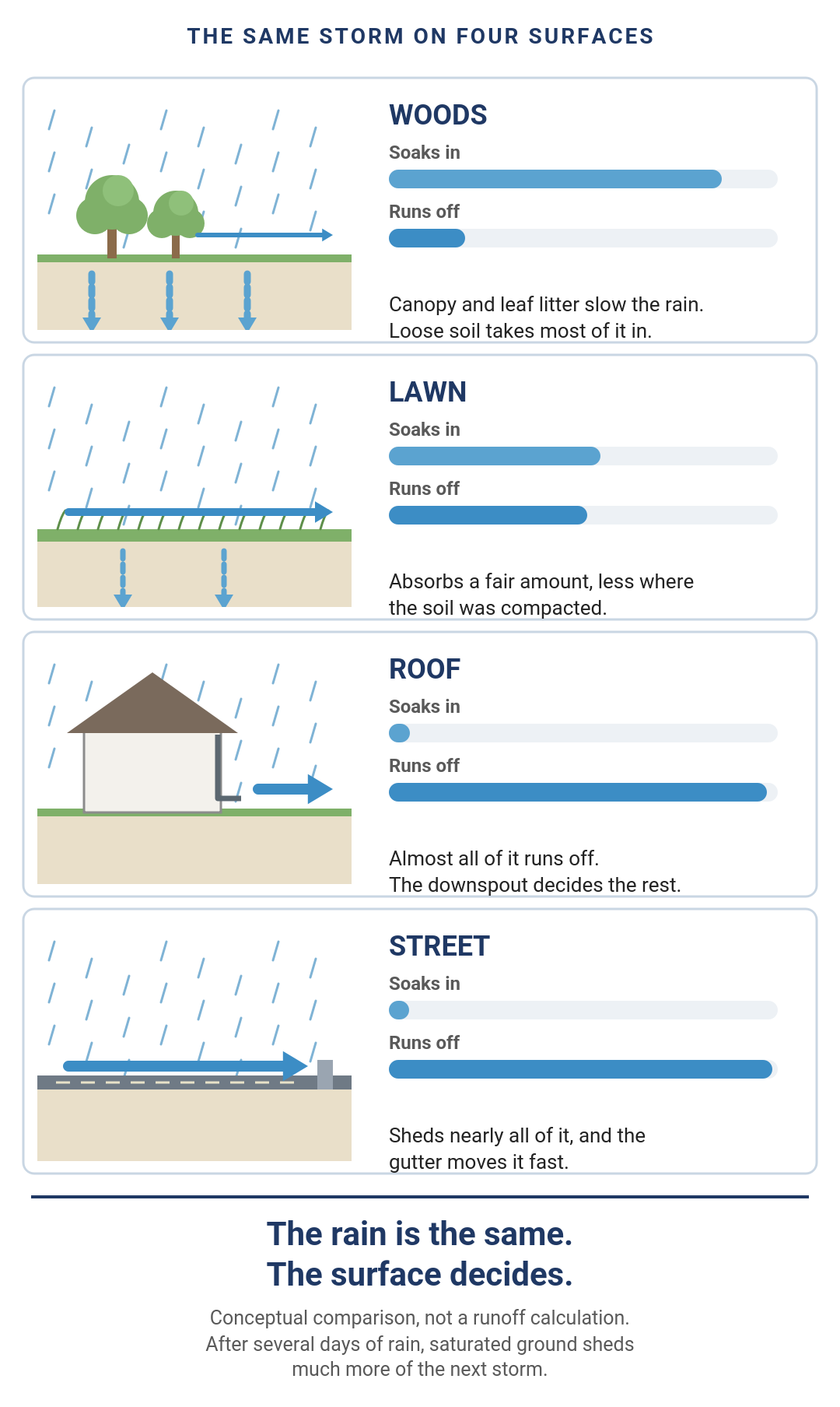
Figure 2. The same storm on four surfaces. The rain does not change. What it lands on largely determines how much of it runs off, and how quickly.
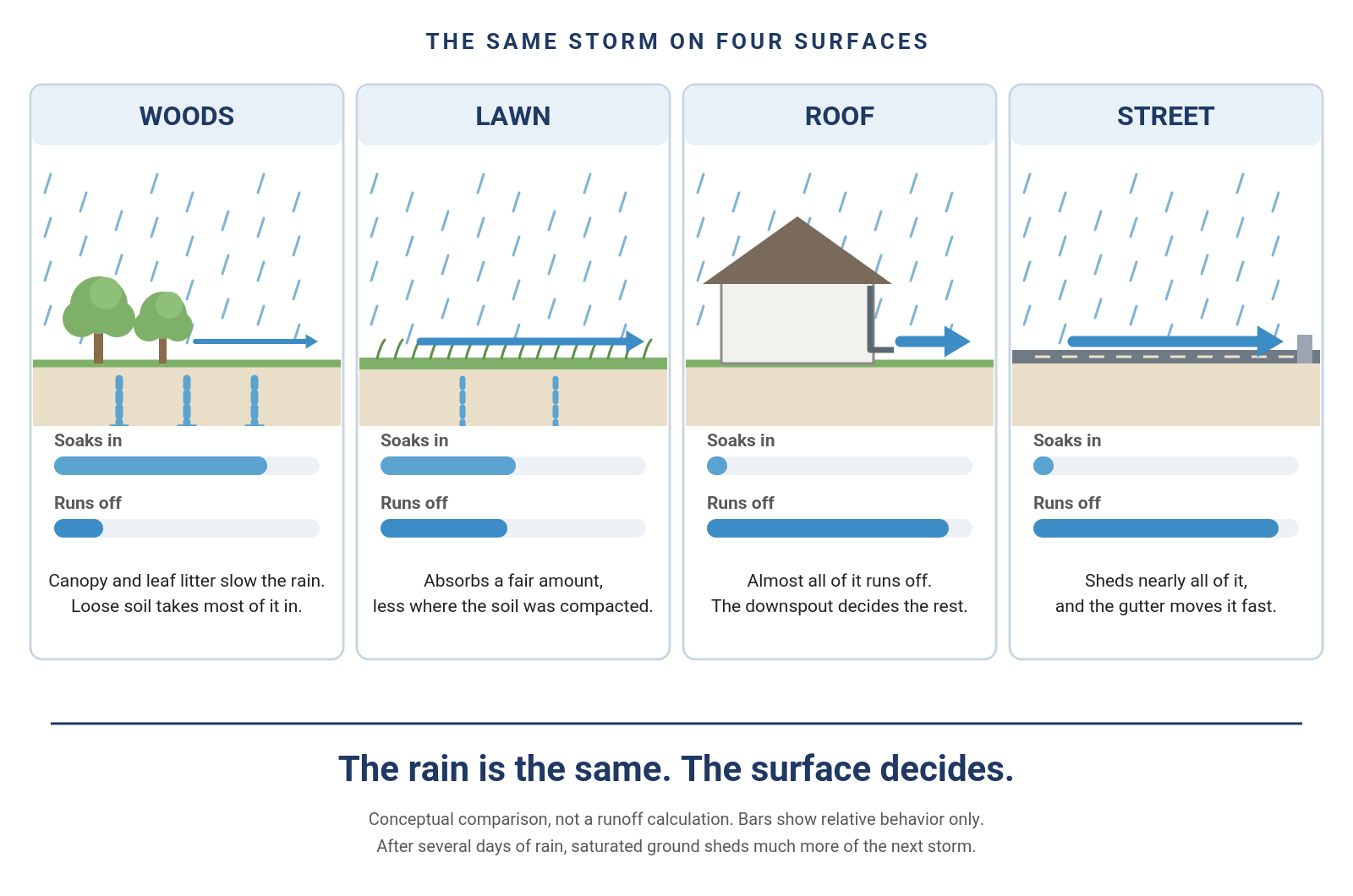
Figure 2. The same storm on four surfaces. The rain does not change. What it lands on largely determines how much of it runs off, and how quickly.
Woods. A forest is a remarkably good drainage system. The canopy catches rain before it reaches the ground. Leaf litter slows whatever gets through. The soil underneath is loose, full of roots and channels, and it absorbs water readily. In a moderate storm, much of the rain that falls on a healthy forest never leaves it as surface runoff at all.
Lawns. Grass is better than pavement and worse than people assume. The difference is usually what is underneath. A lawn in an established neighborhood can absorb a fair amount of water. A lawn in a brand-new subdivision is often sitting on soil that was compacted by months of construction equipment. Heavy machinery squeezes out pore space in the soil, leaving less room for water to enter and move through it. That compacted soil can shed far more water than the undisturbed ground it replaced. It looks like a field. It can behave more like a parking lot.
Roofs. Nearly every drop that lands on a roof runs off it. What happens next depends on the downspout. A downspout that empties onto a lawn gives that water a second chance to soak in. One that empties onto a driveway sends it straight to the street. One that connects to a pipe sends it directly into the drainage system with no delay at all.
Streets. Pavement absorbs almost nothing, and the street itself is part of the drainage system on purpose. That is why a road is higher in the middle than at the edges, and why there is a curb and gutter along the side. The street is not just a place for cars. In a storm, it is a channel.
One honest caveat keeps this from sounding too simple. After several days of rain, even the forest starts to run off. Soil that is already saturated cannot accept water nearly as quickly, so much more of the next rainfall can become runoff. Where rain lands matters enormously, but so does what has already fallen.
How water starts moving
Runoff does not begin as a stream. It begins as a thin sheet of water moving across a surface, often too shallow to notice, spreading out across a roof, a lawn, or a parking lot.
Within a short distance, that sheet starts to gather. Small irregularities in the ground collect it into tiny concentrated paths, the little rivulets you can see crossing a driveway in a heavy rain. Those paths join, and eventually the water reaches something that looks like a channel: a gutter, a ditch, a swale, or a creek.
Sheet, then rivulet, then channel. Every drainage system in the world is some version of that progression.
The important thing is how fast each stage moves. Water crawling across a thick lawn moves slowly. Water sheeting across smooth pavement moves fast. Replace woods with roofs and parking lots, and the same rain does not just produce more runoff. It produces runoff that arrives at the creek much sooner, and all at once.
Development does not create more rain. It changes how quickly the rain arrives.
The hard system
It helps to think of urban drainage as having a hard system and a soft system. In most of a city, runoff eventually meets the hard system, the part most people picture when they think about storm drainage.
Water runs along the gutter to an inlet, the grate or opening at the curb. It drops into a pipe beneath the street. That pipe joins larger pipes, and eventually the whole network reaches an outfall, where it discharges into a pond, a ditch, or a creek.
Two things about this system surprise most people.
The first is that inlets are not designed to catch everything. During a heavy storm, some of the water flowing down a gutter passes right over an inlet and continues to the next one. That is intentional. Designers balance how much water an inlet captures against how much water is allowed to spread out into the street, and a certain amount of flow in the gutter is part of the plan.
The second is that storm pipes work the same way sewers do. As the last article explained, nothing pushes wastewater through a sewer. Gravity does all the work, and the pipes are laid on a slope so that water always moves downhill. Storm drains follow the same rule. They are designed to follow the land down toward the nearest creek, which is why so much storm infrastructure runs along low ground.
Where a road crosses a stream, the stream usually passes underneath through a culvert, a large pipe or box sized to carry the creek beneath the road. Culverts are simple in concept and surprisingly complicated in practice, especially in how fast water moves through them and what that water does to the ground around them.
The soft system
The hard system moves water quickly. The soft system does something else.
Swales, grassed ditches, and vegetated channels also carry runoff, but they are built to slow it down. Grass creates friction. A shallow, wide channel spreads water out instead of concentrating it. Some of the water soaks into the ground along the way, and some of what it was carrying settles out before it reaches the creek.
Where a pipe is designed to get water out of the way, a swale is designed to make water take its time.
One system moves water fast. The other slows it down. Most places use both.
Ponds belong partly to this family. A detention pond catches runoff during a storm and releases it slowly afterward, so that the creek downstream sees a gentler flow than it otherwise would. That is why so many new neighborhoods have one, and why many detention ponds are dry between storms.
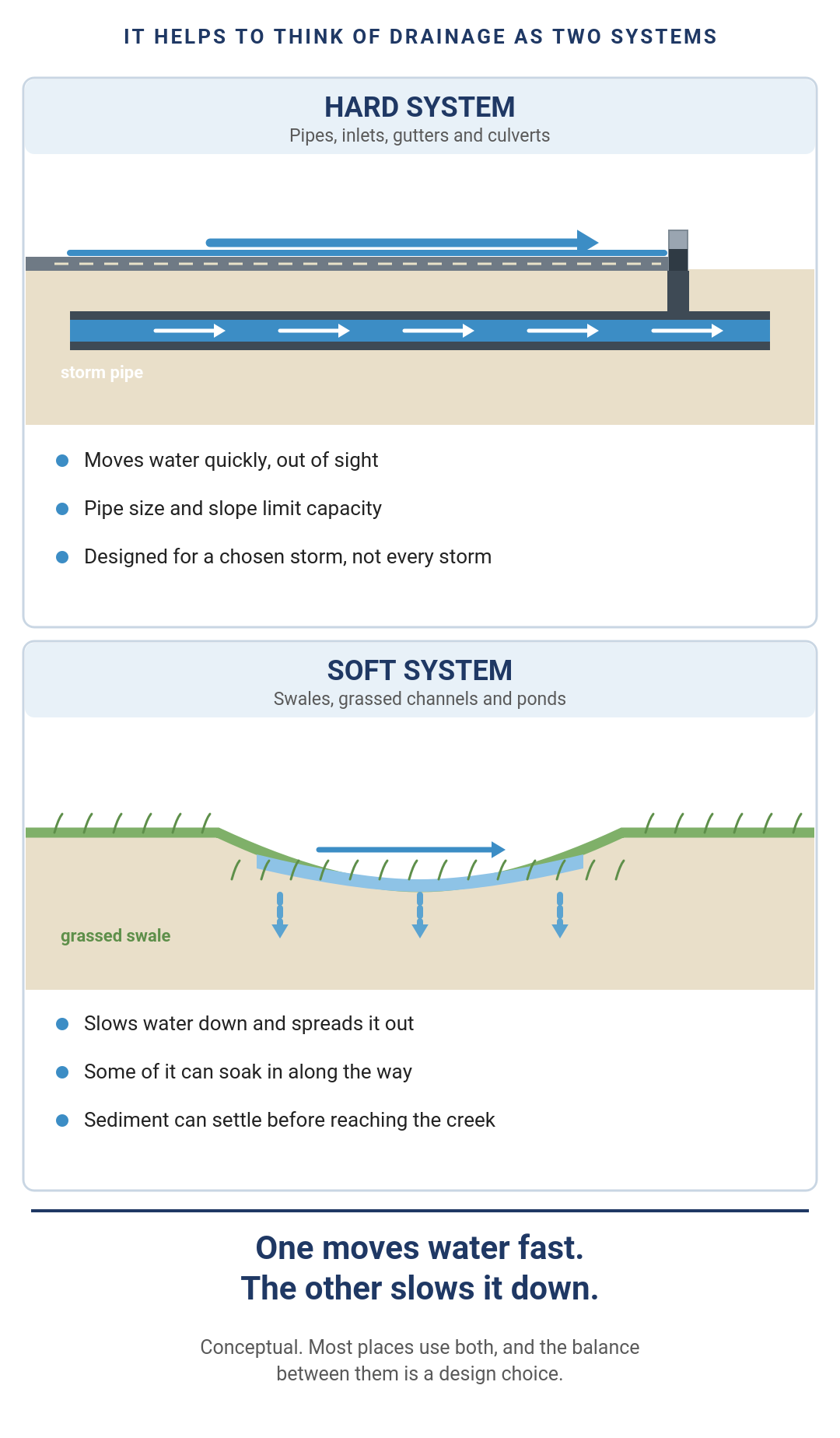
Figure 3. The hard and soft systems. Pipes move water quickly and out of sight. Swales and vegetated channels slow it down and let some of it soak in.
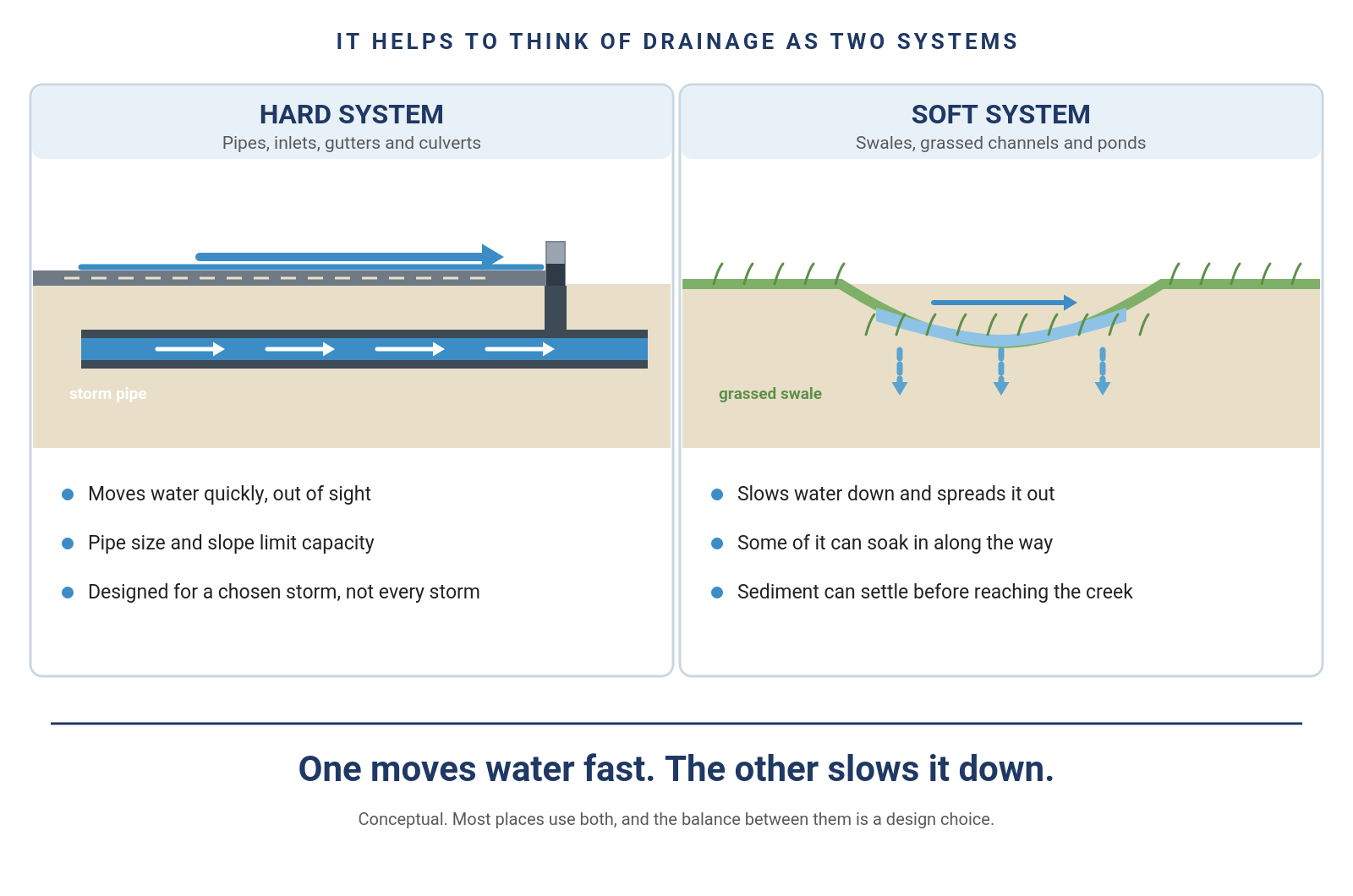
Figure 3. The hard and soft systems. Pipes move water quickly and out of sight. Swales and vegetated channels slow it down and let some of it soak in.
When the pipes are full
Here is the part of the system most people never learn about, and it goes back to where this article started.
Because stormwater is designed around a chosen storm rather than around the largest storm possible, there will always be storms bigger than the pipes. When that happens, the pipes do not fail in some unexpected way. They fill. In a well-planned system, the excess water follows the streets, open channels, and overland paths intended to carry it, toward the same low ground the pipes were following underground.
Engineers think of drainage as two systems at once. The minor system includes the inlets and pipes that handle frequent storms. The major system includes streets, overland paths, and open channels that carry what the pipes cannot during larger, rarer storms. A street carrying water during a severe storm is not necessarily a system that failed. It may be a system doing exactly what it was designed to do.
When the pipe is full, the street takes over. On purpose.
Columbia has a vivid example of what happens when that relationship gets complicated.
Rocky Branch is a small creek that drains Five Points and much of the University of South Carolina campus before reaching the Congaree River. Where Five Points stands today was once a wetland that the creek flowed through. In 1915, to drain that ground and create the commercial district, the city diverted the stream underground.
The district got built. The creek did not go away. It is still there, much of it running through pipes and culverts beneath the streets. At the intersection of Main and Whaley, it passes through a concrete culvert under the road.
In an ordinary rain, the pipe carries it. In a storm large enough, the pipe fills, and the water goes back to where the creek used to be.
A creek can be moved underground. The low ground it was draining does not move with it.
Rainfall intensity, pipe sizing, and what a "100-year flood" really means all grow out of this balance between the storm we plan for and the water that exceeds it. We will return to those questions later in the series.
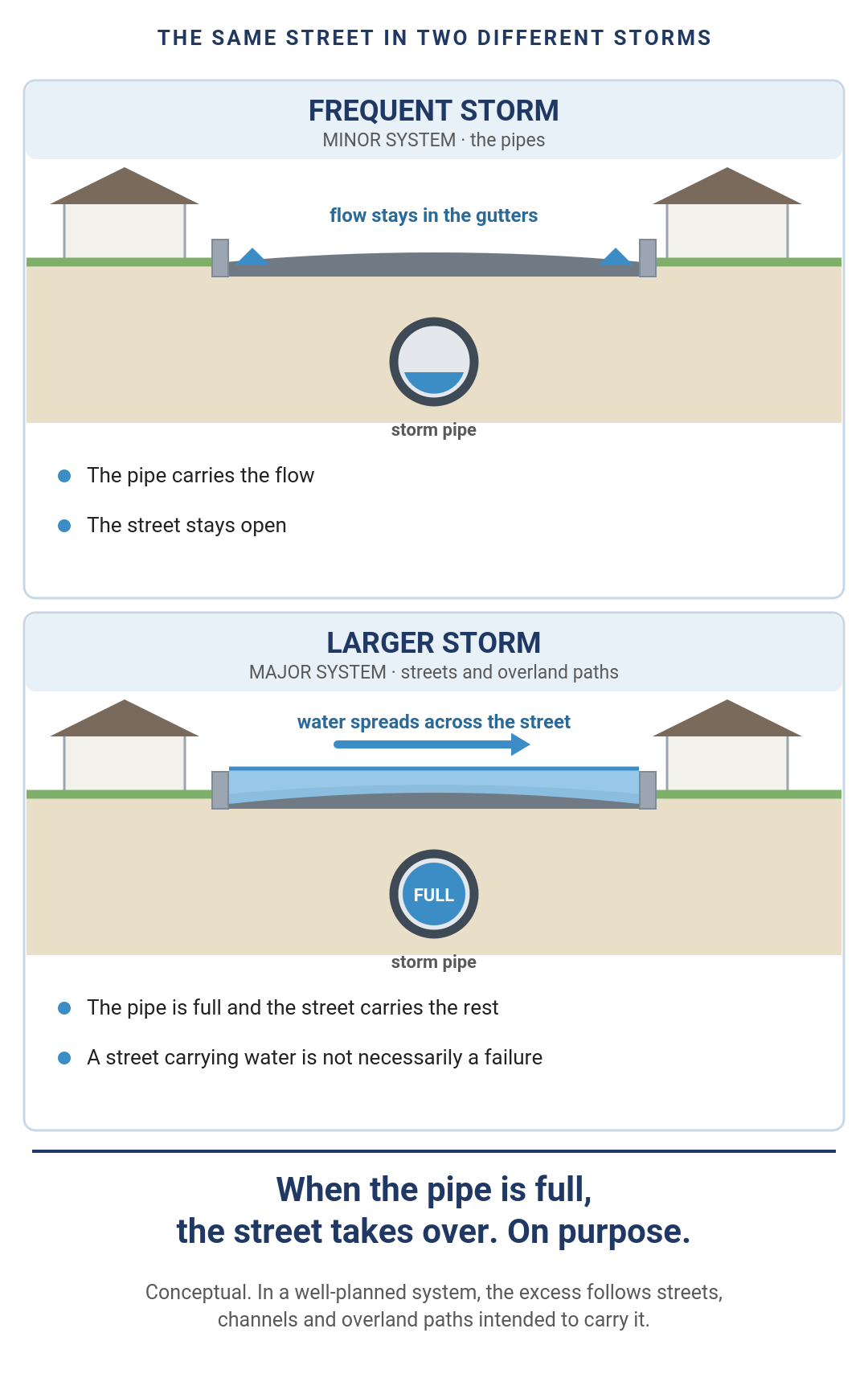
Figure 4. The minor and major drainage systems. Pipes are designed for frequent storms. During larger storms, the street and planned overland paths carry what the pipes cannot.
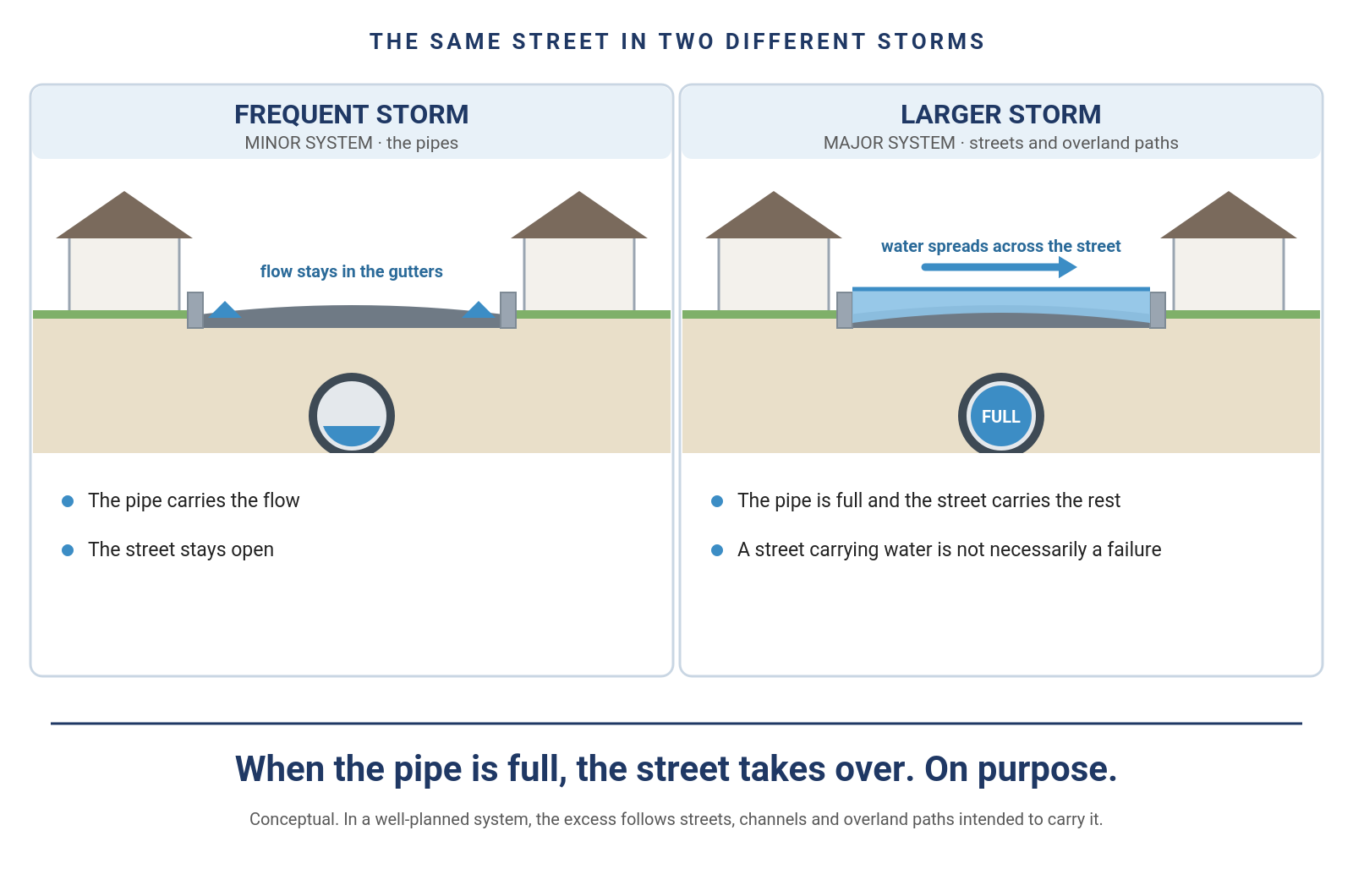
Figure 4. The minor and major drainage systems. Pipes are designed for frequent storms. During larger storms, the street and planned overland paths carry what the pipes cannot.
Where it ends up
Eventually, every raindrop that becomes runoff ends up in a creek. In central Columbia, that might be Rocky Branch or Gills Creek. From there, it reaches the Congaree River.
As the last article pointed out, there is no wastewater treatment plant waiting along the way. At most, the runoff may pass through a stormwater pond or another treatment practice before it reaches the creek. Whatever the rain picked up on the way, from oil on a parking lot to fertilizer on a lawn to sediment from a construction site, travels with it.
Drinking water reminded us that we may drive over our own supply. Wastewater reminded us that everyone is upstream of somebody. Rain brings that connection home.
Every roof in Columbia is upstream of a creek.
The whole trip, collapsed
Cloud.
Leaf, lawn, roof, or street.
Soil or gutter.
Inlet or swale.
Pipe or pond.
Creek.
Congaree River.
A good stormwater system is not one that never overflows. It is one that overflows where someone planned for it to.
Sources
University of South Carolina, Rocky Branch Watershed Alliance, background and 2013 student reports — Rocky Branch drainage area, 1915 diversion of the stream underground to create Five Points, and impervious cover in the watershed.
National Weather Service, Eastern Region Technical Attachment No. 2023-01 (November 2023) — Rocky Branch watershed, flooding at Main and Whaley Streets, and the culvert beneath the intersection.
Congaree Riverkeeper — Rocky Branch and Gills Creek as tributaries of the Congaree River.
USDA Natural Resources Conservation Service, Urban Hydrology for Small Watersheds (Technical Release 55) — sheet flow, shallow concentrated flow, and channel flow.
From the same series
← What Happens When You Turn On the Faucet? Follow the public water system backward, from the tap to its source.
← What Happens After You Flush? Follow wastewater in the other direction.
→ Why a 1-Hour Thunderstorm Can Cause More Flooding in Columbia Than a Day of Rain. What rainfall intensity does to a drainage system.
This article is part of a series explaining how the systems around us actually work, written for people who are not engineers.
Next: What Happens When You Drive to Work?
